Buyer and owner guide · reviewed Oct 7, 2026
At a glance: For the documented Gemline/NuGen Fusion XT-48, published rated capacity ranges from 23,500 grains at 6 lb salt to 36,000 grains at 19.5 lb. Its listed maximum service flow is 14.3 gpm at 15 psi pressure loss. Start with measured hardness, treated-water demand and simultaneous flow, then confirm that the actual equipment matches the dated configuration.
This model guidance uses a NuGen manufacturer-authored manual marked May 10, 2012, hosted by a dealer, and a manufacturer-attributed Gemline brochure hosted on a dealer CDN. Documents were checked October 7, 2026. Match the installed or quoted model and controller; latest document revision, current certification, warranty coverage, prices, stock and local service availability are not established by this review.
Match the Gemline 48 name to the Fusion XT-48
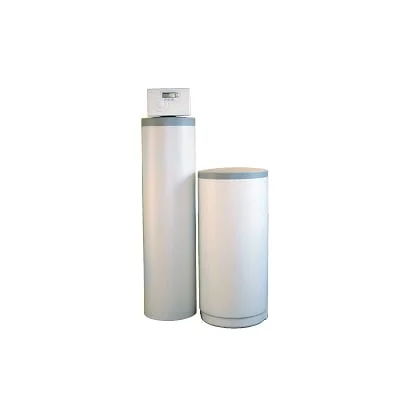
The catalog calls this configuration Fusion XT / Gemline 48. The brochure identifies GEMLINE-48 with NuGen Fusion XT-48. Use that mapping to locate the documented model, then check the label and controller on the actual equipment. A Gemline brand mark alone cannot establish that the installed tank, resin amount or programming matches this sheet.
The manufacturer manual is dated May 10, 2012; its latest revision is not established here. Ask for matching documentation if the equipment or controller differs. The dealer-hosted brochure supplies the name mapping; its sales headlines remain separate from the technical ratings.
Sources: Gemline brochure, PDF page 3 and NuGen Fusion XT manual, page 1; the manual date appears on NuGen Fusion XT manual, page 38.
XT-48 capacity changes with the salt dose
The documented XT-48 contains 1.3 cubic feet of resin. Its performance table pairs each capacity with the salt consumed for that listed regeneration setting:
| Listed salt setting | Rated capacity | Salt per regeneration |
|---|---|---|
| Low | 23,500 grains | 6 lb |
| Medium | 29,500 grains | 11 lb |
| High | 36,000 grains | 19.5 lb |
The model name does not mean 48,000 usable grains at every setting. A separate brochure sales table describes GEMLINE-48 as 45,000 grains, while its performance table agrees with the manual's dose-specific numbers above. For a quote, ask which documented capacity and salt dose the proposed programming actually uses.
Moving from the low to medium row adds 6,000 grains with 5 lb more salt; moving from low to high adds 12,500 grains with 13.5 lb more salt. Those are arithmetic differences between published points, not evidence of annual operating cost. The manual says salt dose and exchange capacity are manufacturer presets. Do not change them from this table or borrow XT-60 values.
Sources: NuGen Fusion XT manual, page 33, NuGen Fusion XT manual, page 4, Gemline brochure, PDF page 2 and Gemline brochure, PDF page 3.
Estimate the load before judging the smaller capacity
Start with measured untreated hardness and gallons actually routed through the softener. Record units and test date; have the installer account for reserve and other relevant constituents.
For an illustration, 200 treated gallons a day at 15 grains per gallon create a 3,000-grain daily load. Dividing the XT-48's three published capacities by that load gives about 7.8, 9.8 and 12.0 days. These are capacity arithmetic before reserve, water-use variation and controller decisions; they are not regeneration intervals to enter.
If that same hypothetical home's hardness were 30 gpg, the load would double to 6,000 grains a day. The low-dose arithmetic would fall to about 3.9 days. The manual uses hardness to calculate gallons between regenerations. Ask for the measured input and configured capacity together.
Source basis: NuGen Fusion XT manual, page 9 and NuGen Fusion XT manual, page 33. The household inputs and divisions are publisher illustrations. The sizing calculator can organize your own inputs.
The XT-48 has the higher listed flow of this pair
The performance table gives the XT-48 a 14.3 gpm maximum service flow with 15 psi pressure loss at that flow. The XT-60 is listed at 12.5 gpm with the same stated loss at its own flow. The larger model therefore provides more capacity per listed regeneration without having the larger flow figure.
Assess fixtures that may run together, supply pressure and the complete treatment train. Daily gallons do not describe peak demand; the sheet supplies one rated point, not a full pressure-loss curve.
For the documented XT-48, the table also lists 40–90 psi working pressure, 40–100°F operating water temperature, a 1-inch pipe size and up to 2.7 gpm discharge during regeneration. These are application checks for the matching configuration, not instructions to adjust pressure or install a drain yourself. Confirm both the resin-tank space and the separate salt-tank access; the manual and brochure give different brine-tank dimensions, so a universal footprint would be misleading.
Source: NuGen Fusion XT manual, page 33; compare the dimension rows in Gemline brochure, PDF page 2 and Gemline brochure, PDF page 3.
Keep programming and recovery records specific to the XT-48
Record the untreated hardness result, current clock, scheduled regeneration time and installer-confirmed capacity/salt configuration. The reviewed XT-48 controller uses CLOCK for time adjustment; the separate XT-32C instructions use SET CLOCK. A similar-looking faceplate is not a reason to transfer a different controller's steps.
The manual's 20 gpg hardness, 14-day override and 2:00 a.m. regeneration time are documented defaults. They do not describe your measured feed or guarantee a two-week cycle. Metered use can call for regeneration earlier, and demand during regeneration receives untreated water. Choose timing with the household's use pattern in mind.
If salt has run out, the matched manual says to replenish it and wait at least two hours before regeneration. That recovery instruction does not diagnose an overflowing tank, failed drain or recurring error. Use the Gemline settings guide for the supported control distinctions and not-softening guide for observations to bring to service.
Sources: NuGen Fusion XT manual, page 4, NuGen Fusion XT manual, page 8, NuGen Fusion XT manual, page 9 and NuGen Fusion XT manual, page 12.
What to require in an XT-48 quote or service proposal
Ask for a proposal that identifies the actual XT-48 equipment and matches it to its documentation. A useful record contains:
- The full model, controller and any different tank or resin configuration.
- The tested hardness, treatment assumptions, programmed capacity and salt dose.
- An assessment of simultaneous flow and available pressure.
- The included bypass, plumbing, drain work, startup and treated-water check.
- Access for adding salt and servicing the installed equipment.
- Separate equipment, installation and future service charges, with the applicable written warranty.
The dated documents do not establish current price, stock, dealer authorization, local service or certification status. Obtain the applicable listing, warranty and itemized scope; brochure logos and broad warranty wording do not settle a particular sale.
If the XT-48 meets the verified application, its lower listed capacity is not itself a fault. If it repeatedly produces measured hard water, establish the operating cause before buying a larger unit. The XT-48 versus XT-60 comparison considers the capacity tradeoff separately.
Document basis: NuGen Fusion XT manual, page 33 and Gemline brochure, PDF page 3. The quote checklist is publisher guidance, not a manufacturer service promise.
Frequently asked questions
How much rated capacity is documented for the Gemline Fusion XT-48?
The reviewed performance sheet lists 23,500 grains at 6 lb salt, 29,500 at 11 lb and 36,000 at 19.5 lb. The model name and separate sales headline are not the usable capacity at every setting; confirm the actual programmed configuration.
Does the XT-48 have lower flow than the XT-60?
The reviewed table lists XT-48 at 14.3 gpm and XT-60 at 12.5 gpm maximum service flow, each at 15 psi pressure loss at its own listed flow. These are documented rating points, not a guarantee of flow or pressure in a home.
Can the sizing example tell me how often to regenerate an XT-48?
No. The example divides a published capacity by a hypothetical daily hardness load before reserve, water-use changes and controller rules. Use measured conditions and have the installer confirm capacity, salt dose and timing for the actual equipment.
What should I confirm before buying or servicing a Gemline 48?
Match the full model and control to its manual, then confirm water tests, programmed capacity and salt dose, simultaneous flow and the installation plan. Obtain current pricing, availability, certification and warranty documents separately; the dated technical literature does not settle them.
Related guides
Sources for this model guide
- NuGen manufacturer-authored Fusion XT owner manual, hosted by Shilo Plumbing; checked October 7, 2026 — Fusion XT Manual – 5/10/2012; latest revision not established; reviewed 2026-10-07.
- Gemline manufacturer-attributed Water Softening Series brochure, dealer-CDN hosted; checked October 7, 2026 — Performance sheet marked 5.2.2012; overall brochure revision otherwise unstated; reviewed 2026-10-07.
Known product details
- Manufacturer
- Gemline / Nugen
- Model or family
- Fusion XT-48
- Catalog name
- Fusion XT / Gemline 48 Water Softener
- Product category
- Water softener
- Product family
- Fusion XT / Gemline
- Historical equipment price
- No current verified price; equipment and installed-scope pricing require current confirmation.
- Source reviewed
- 2026-08-16
Evidence and source boundary
Price and availability notes are historical source records, not live offers or stock checks. After any stated verification expiry, obtain a new seller check before relying on the value.
Manufacturer catalog presence was observed in the pinned source workbook. Current stock, dealer authorization, installation scheduling, and address-level service are not verified.
The controlling source for this catalog observation is find.wqa.org, reviewed on 2026-08-16. A manufacturer page may change, redirect, or describe a family rather than every configuration; compare the exact current documentation before purchase.
What still needs confirmation
- Certification: verify the exact model number, contaminant or reduction claim, standard, listing scope, and current certificate.
- Sizing: match household demand, flow, plumbing, pressure, water chemistry, and waste/discharge requirements.
- Ownership: confirm current equipment price, installation scope, consumables, maintenance intervals, warranty conditions, and service access.
- Availability: manufacturer catalog presence does not establish current stock, dealer authorization, installer capability, or local availability.
How to use this record
- Copy the exact model or family name shown above.
- Open the cited manufacturer source and confirm that the current page still matches.
- Request the current model-specific specification sheet, certification listing, warranty, and installed-scope quote.
- Use water evidence and site constraints before comparing this product with alternatives.