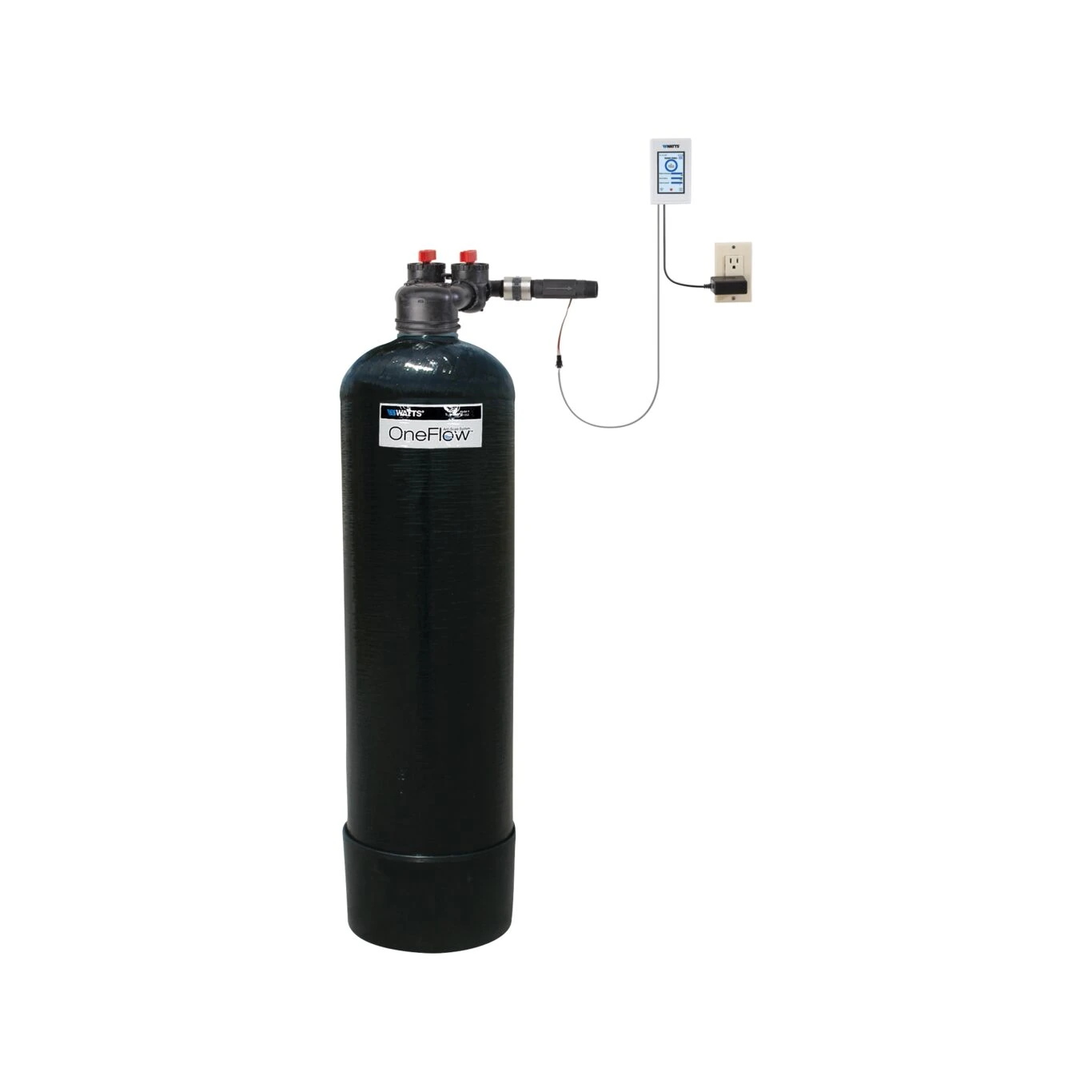
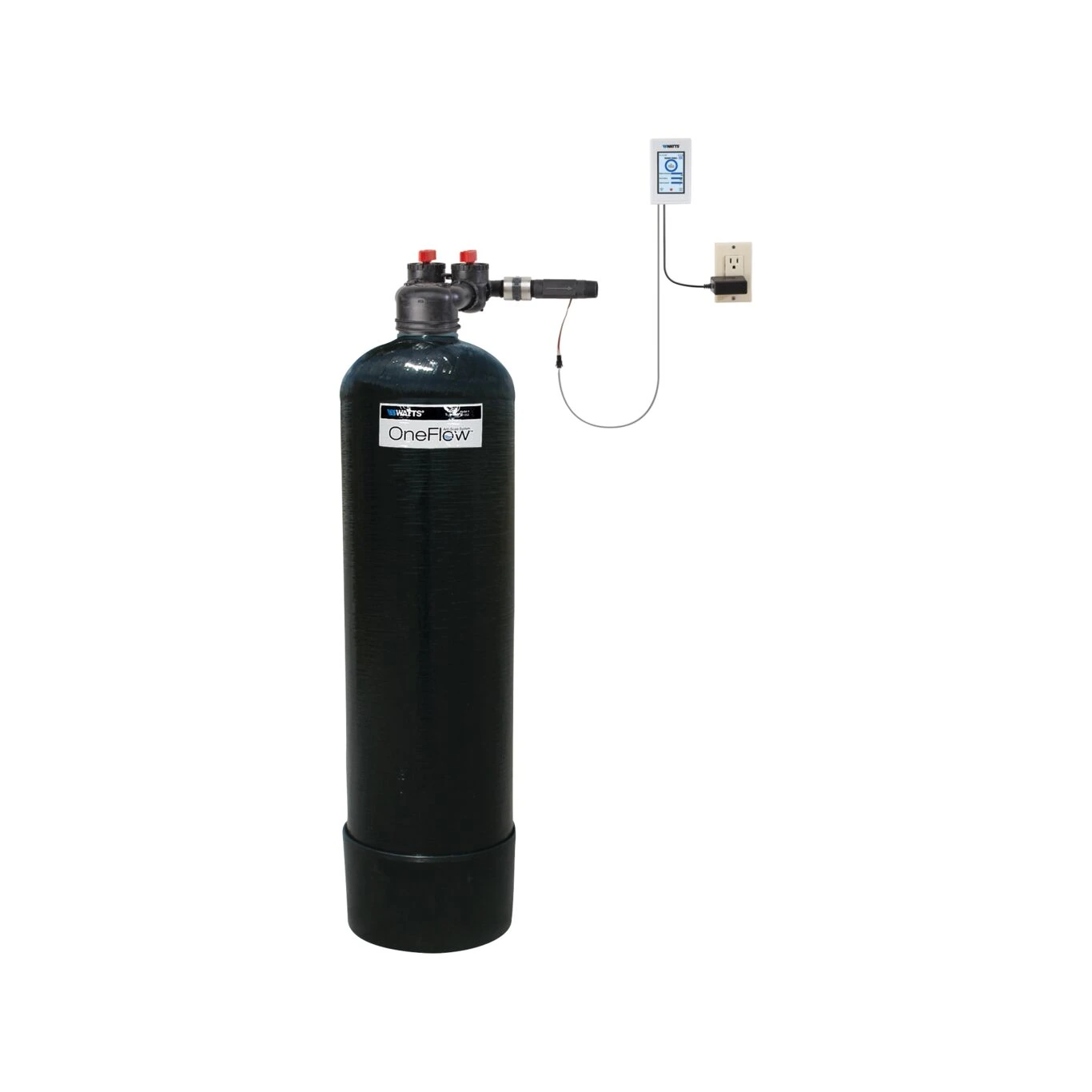
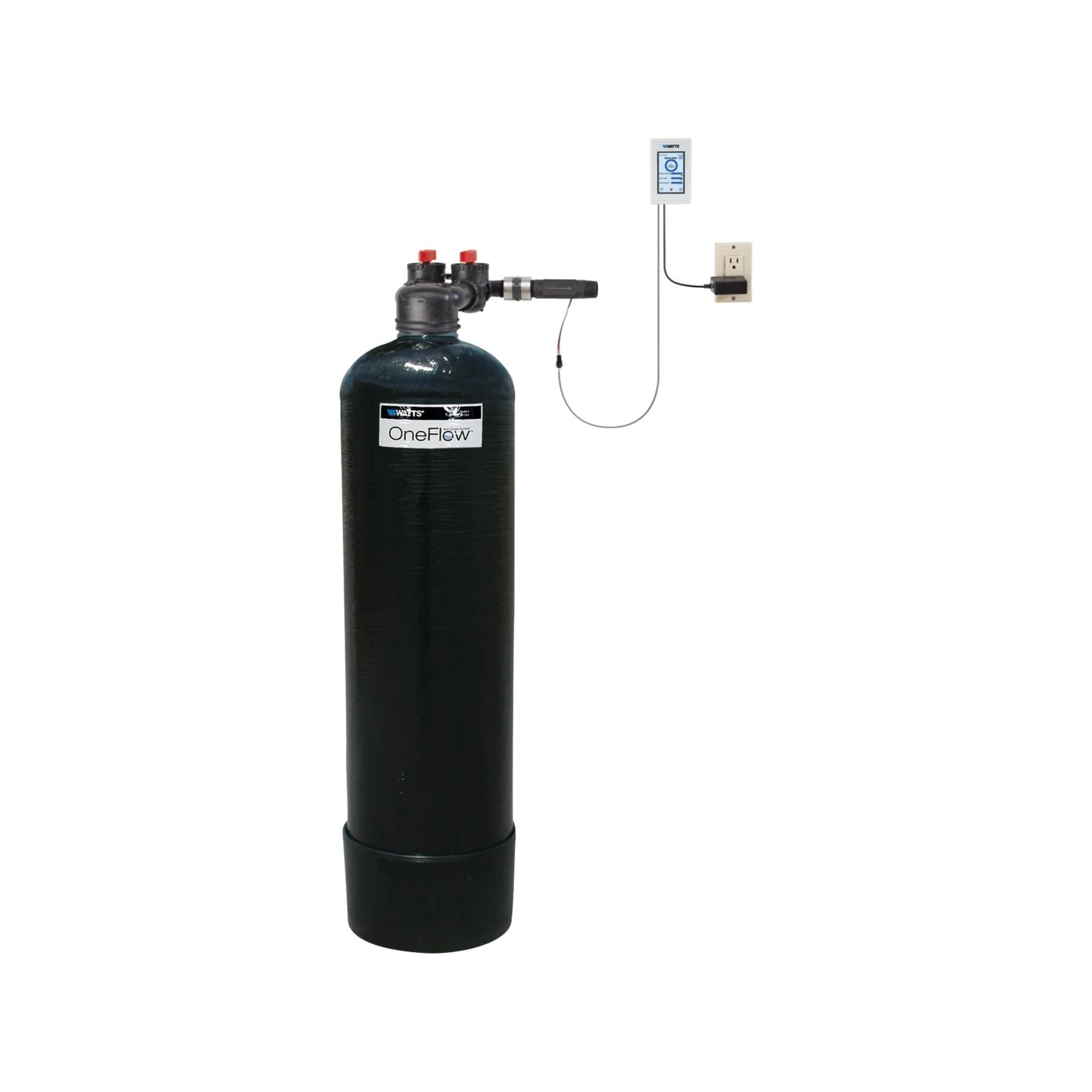
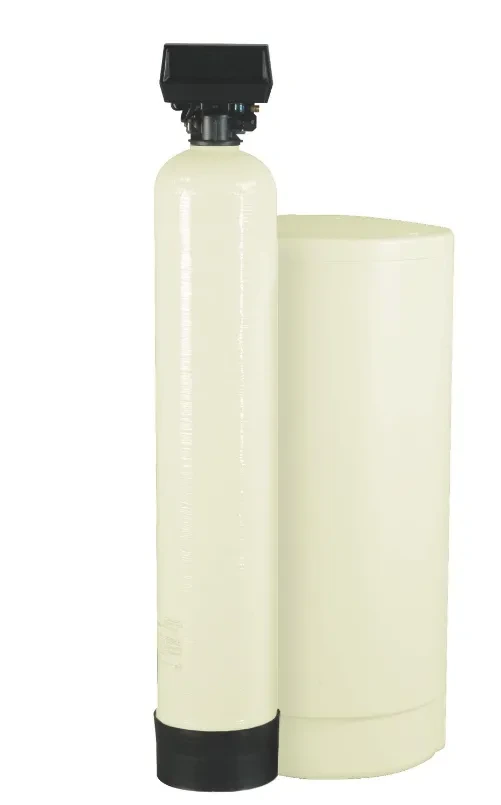
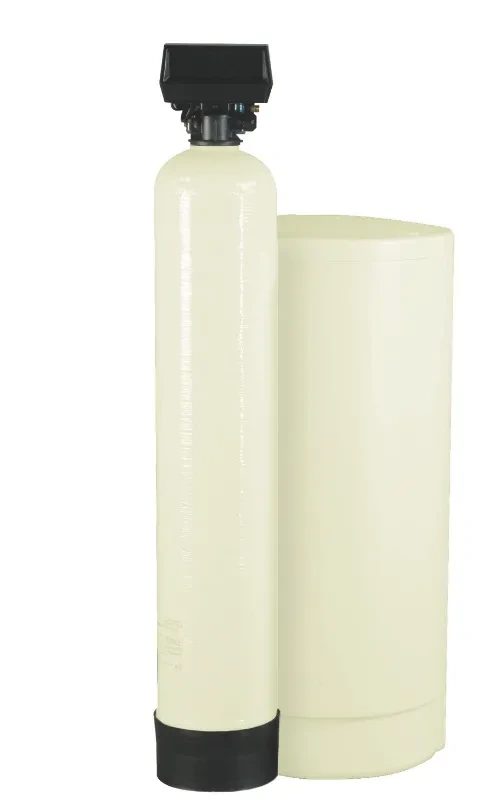
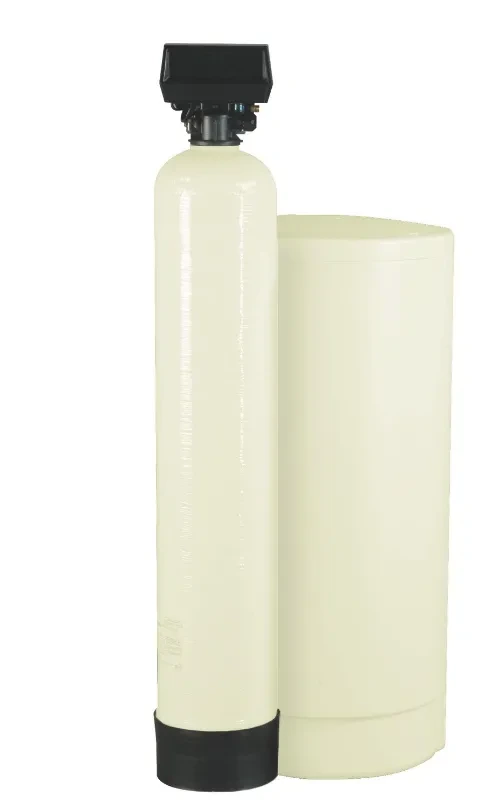
What Is Watts OneFlow?
OneFlow is Watts’ salt-free scale-prevention technology.
Instead of exchanging calcium and magnesium out of the water, OneFlow is designed to alter how hardness minerals behave so they are less likely to form hard scale on protected surfaces.
The minerals remain in the water.
That means:
- OneFlow does not produce conventionally softened water
- a hardness test can still show hardness after treatment
- salt is not required for normal operation
- there is no conventional softener brine-regeneration cycle
Watts offers OneFlow across residential and commercial configurations.
For homeowners, the exact model, rated flow, incoming-water chemistry limits and replacement requirements need to be checked before specifying the system.
Compare a tracked Watts OneFlow configuration.
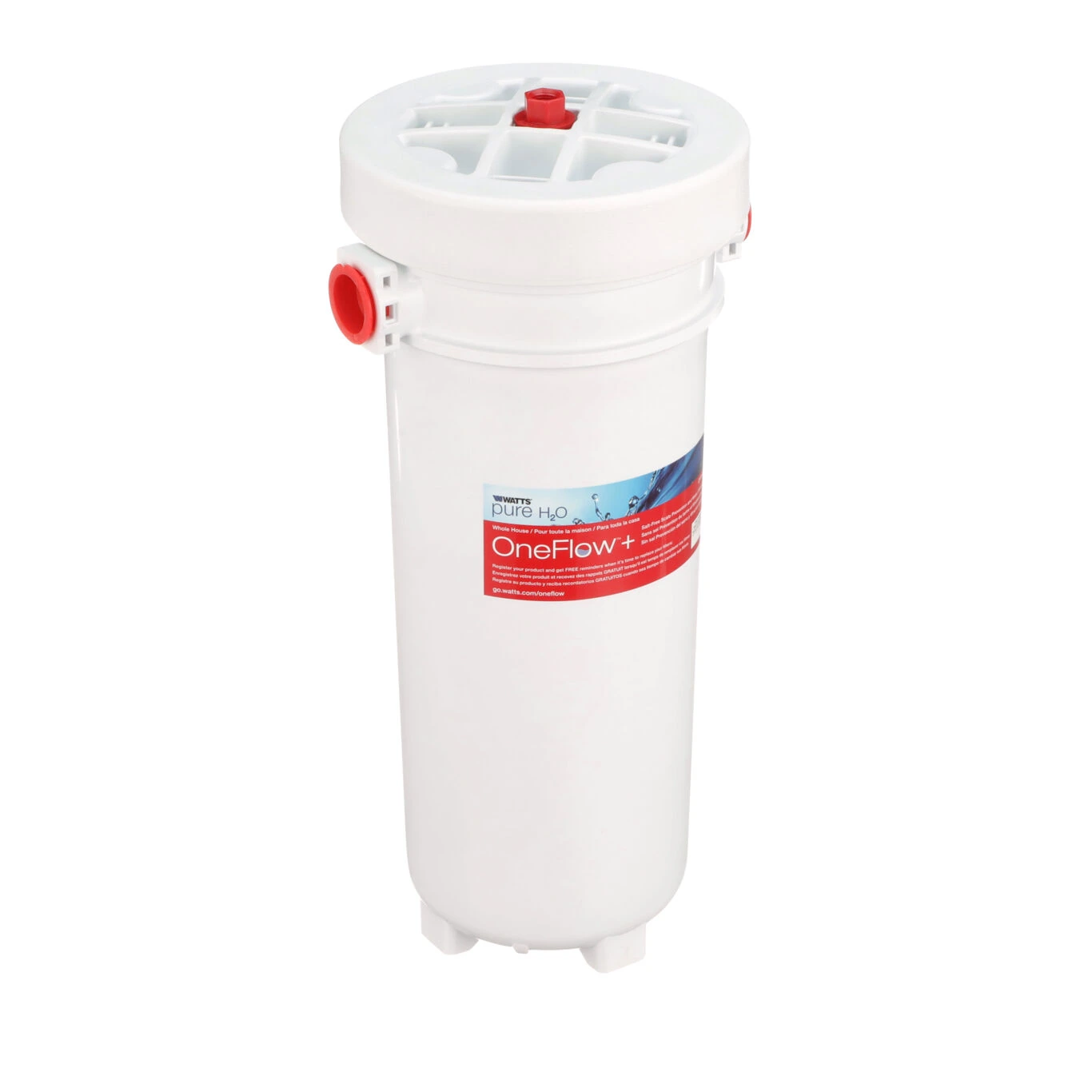
Watts OneFlow+ OFPSYS
OneFlow+ OFPSYS combines salt-free scale prevention with whole-house filtration in a cartridge-based format.
Watts currently lists OFPSYS as a residential combination scale-and-filtration system with a maximum documented flow rate of 10 GPM.
The system uses separate replaceable cartridges for:
- radial-flow carbon filtration
- OneFlow scale-prevention media
The carbon stage and the scale-prevention stage perform different jobs.
The presence of carbon filtration does not turn OneFlow into a water softener, and the scale-prevention media does not mean hardness minerals have been removed.
OFPSYS is most relevant where the desired outcome is:
- whole-house filtration, plus
- scale management without conventional salt regeneration.
View the Watts OFPSYS research profile.
Does OneFlow Make Water Soft?
No.
OneFlow is not an ion-exchange water softener.
Calcium and magnesium remain present in the treated water, so the water should not be expected to test as conventionally soft.
This distinction affects expectations around:
- hardness test results
- soap behaviour
- spotting
- scale formation
- appliance protection
- salt use
- wastewater
- ownership requirements
A homeowner who specifically wants lower measured hardness should compare Watts’ conventional softeners instead.
Watts Whole-House Filtration
Watts also manufactures whole-house filtration systems.
These products belong in a separate treatment category from both softeners and OneFlow.
Whole-house filters can be appropriate for concerns such as:
- sediment
- chlorine
- taste and odour
- lead
- PFAS
- cysts
- other named contaminants
but only where the exact model has evidence supporting the specific reduction claim.
Do not assume that every Watts filtration system removes every contaminant.
A filter housing, carbon media or brand reputation is not itself proof of a reduction claim.
Always verify:
- exact model number
- certification standard
- named contaminant
- rated flow
- capacity
- pressure conditions
- cartridge/media replacement requirements
Watts Big Bubba Whole-House Filtration
Watts’ current residential comparison materials include Big Bubba as a whole-house filtration platform.
The exact cartridge determines the treatment claim.
That means the Big Bubba housing itself should not be treated as one universal contaminant-removal product.
Depending on the exact filter configuration, Watts documents applications including chlorine, lead, cyst and certain PFAS reductions.
The correct buying question is therefore:
Which exact Big Bubba cartridge is installed, and what current certification or performance evidence supports the claim being made for it?
Review the manufacturer’s Big Bubba BB-S101 documentation.
Watts Reverse Osmosis Systems
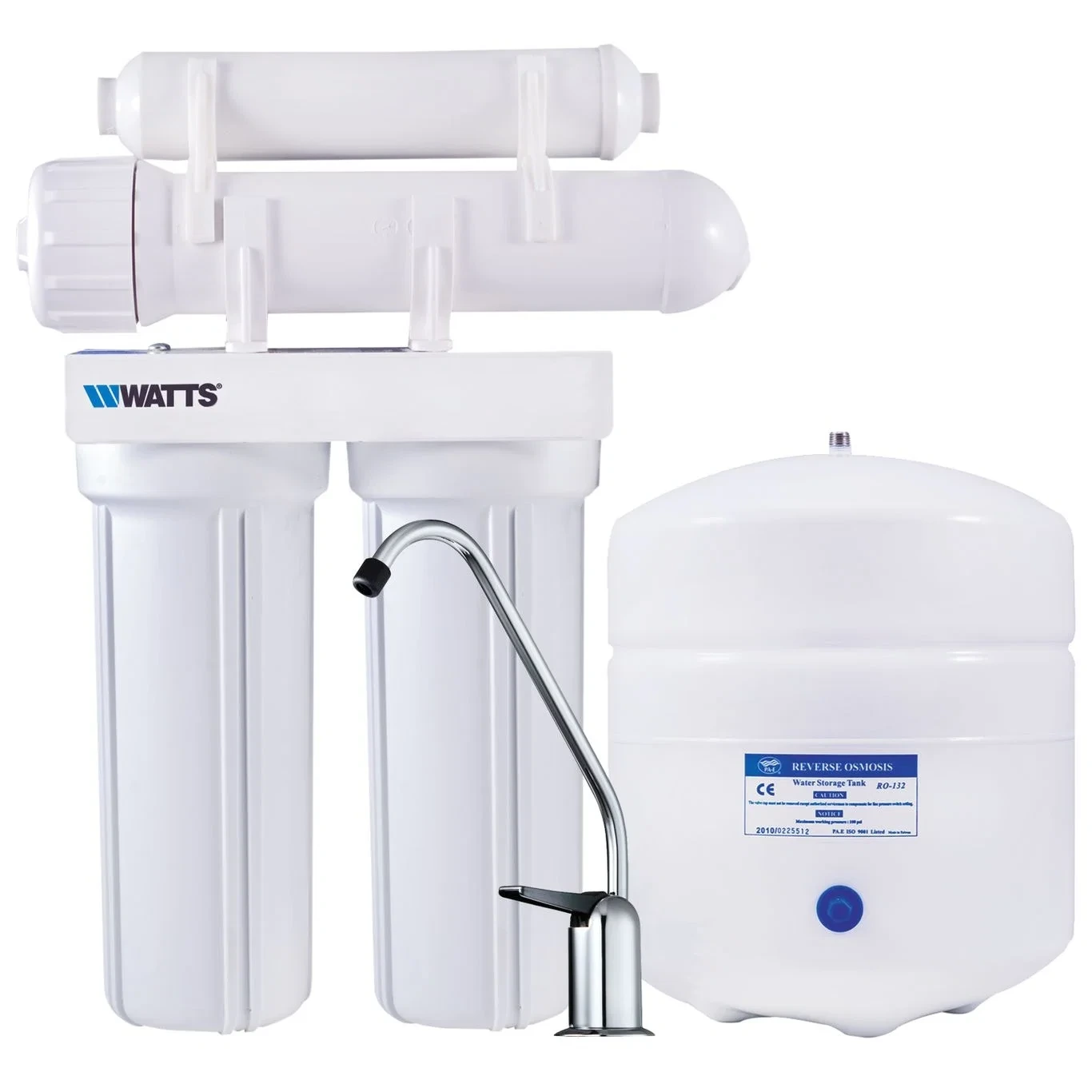
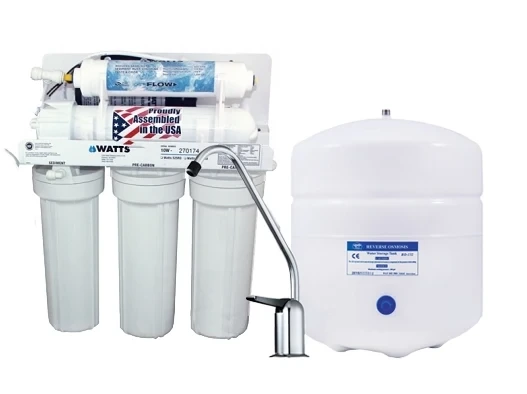
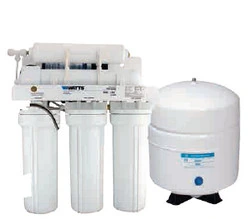
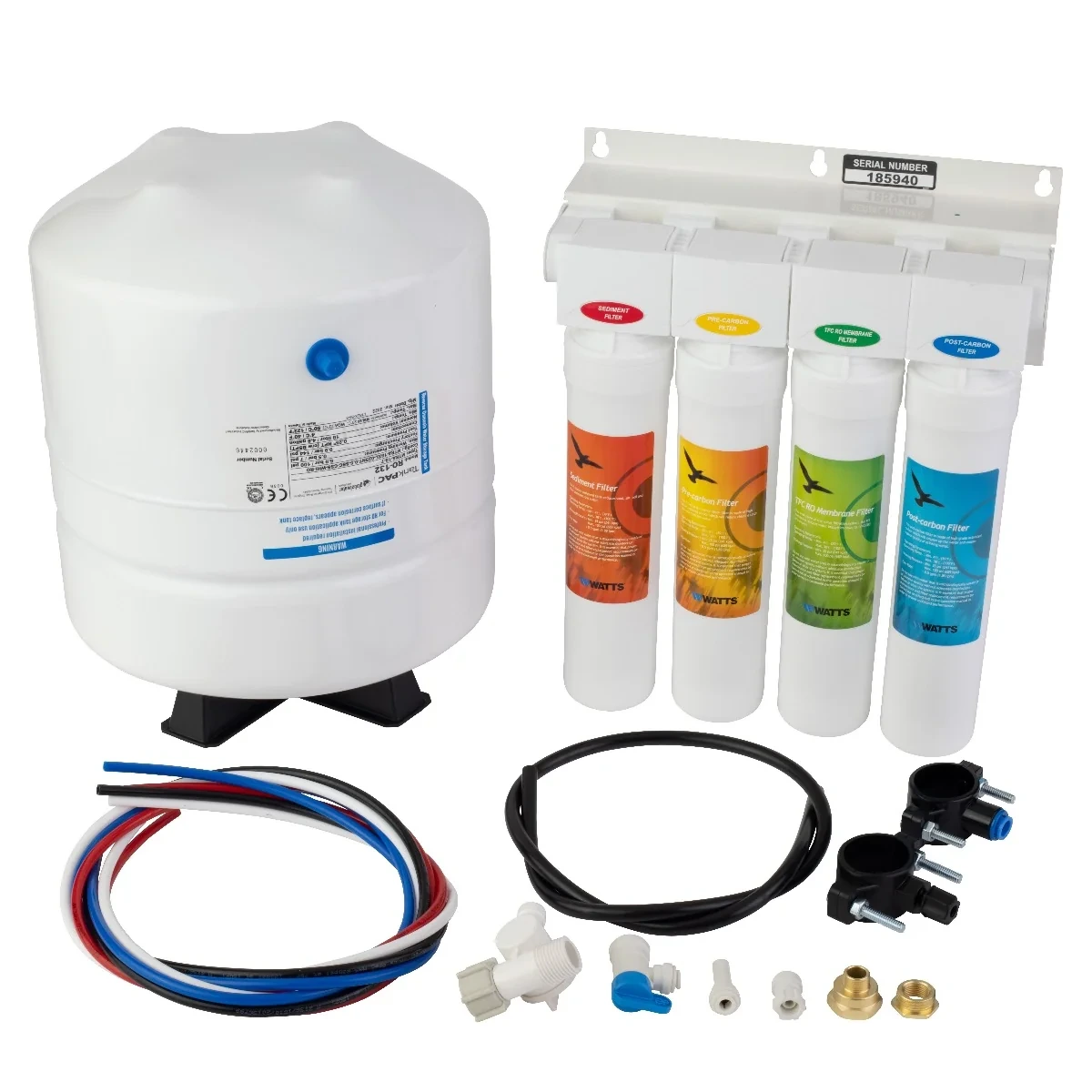
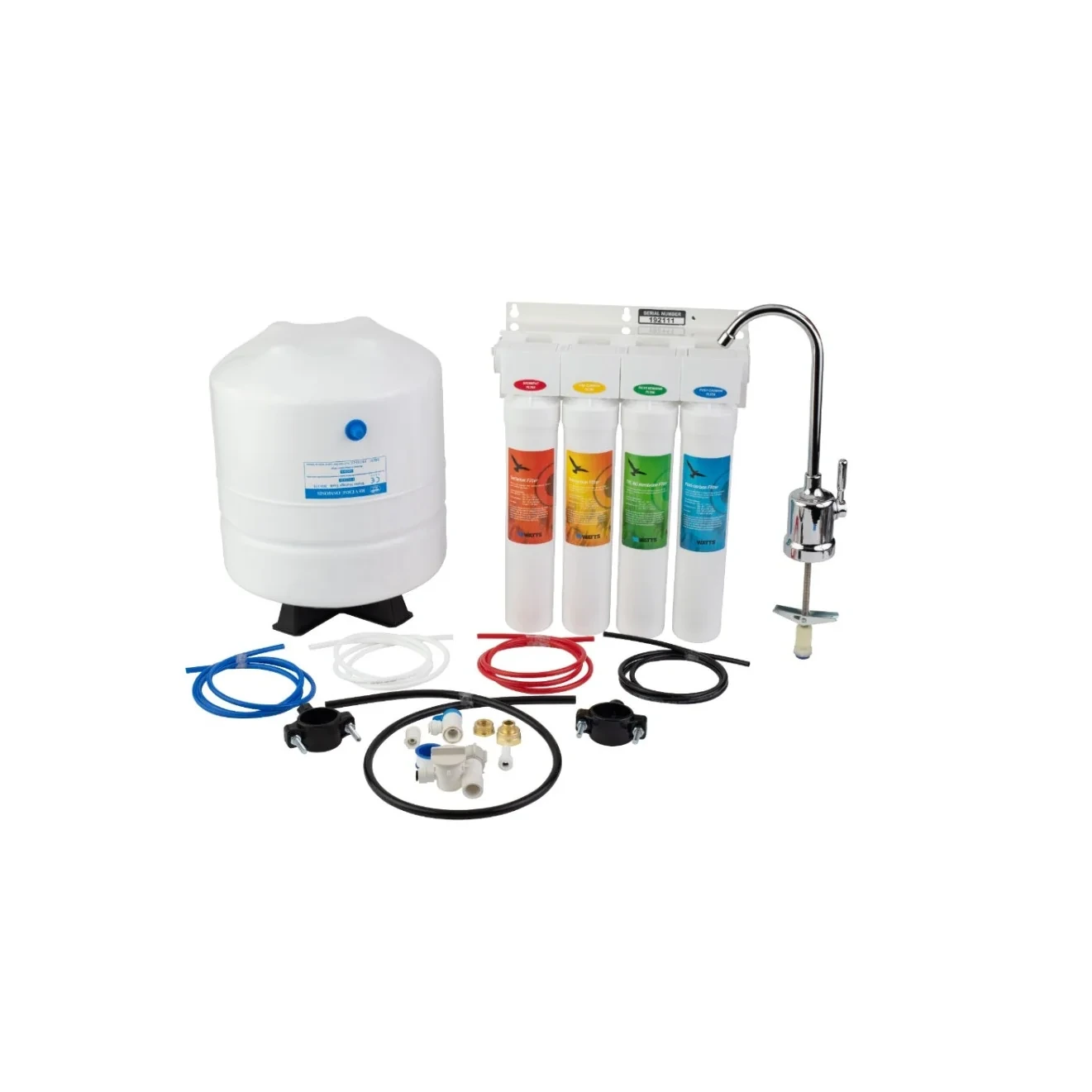
Watts manufactures point-of-use reverse-osmosis systems for drinking-water treatment.
Current residential products include the Kwik-Change PWROKC4 platform, alongside other Watts RO configurations.
Reverse osmosis is a separate treatment job from whole-house softening.
A Watts RO system generally treats drinking and cooking water at a dedicated faucet rather than treating every fixture in the home.
Watts currently describes PWROKC4 as an RO system capable of reducing total dissolved solids, with additional reduction claims depending on the exact certified system configuration.
Compare the tracked Watts WQC4RO11-50MTNF research profile.
Does Watts Reverse Osmosis Remove Hardness?
Reverse osmosis can reduce dissolved minerals at the treated faucet, but a residential under-sink RO system is not a replacement for a whole-house water softener where hardness throughout the property is the problem.
The distinction is treatment location:
Water softener
→ treats water entering the home
Reverse osmosis
→ typically treats drinking water at one faucet
A household can therefore legitimately use both technologies for different purposes.
Watts PFAS and Lead Filtration
Watts currently offers dedicated drinking-water filtration products targeted at specific contaminants.
Manufacturer comparison material includes products for:
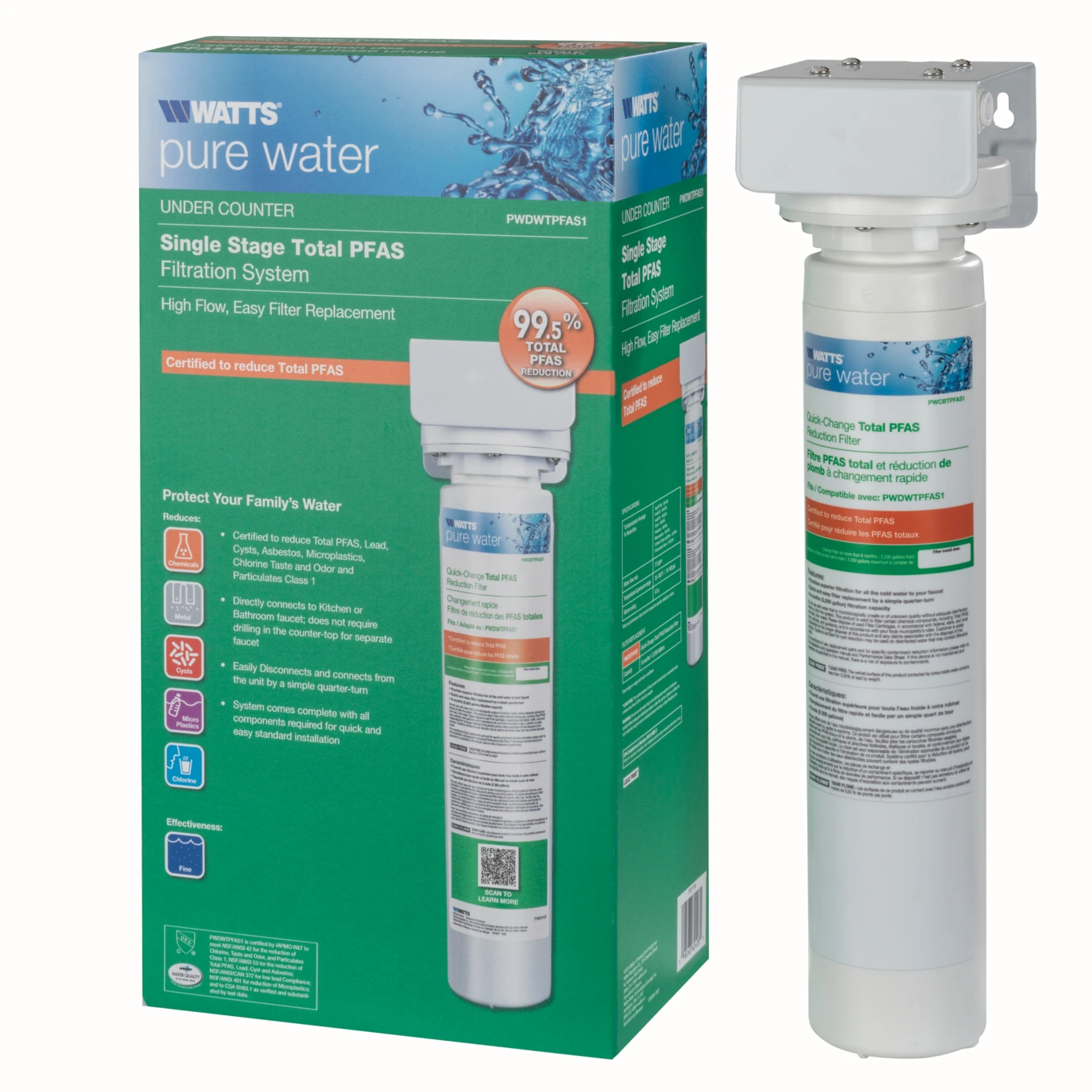
- total PFAS reduction
- PFOA/PFOS reduction
- lead reduction
- parasitic cyst reduction
These claims should be tied to the exact product rather than generalised across the Watts brand.
For example, the existence of a Watts PFAS filter does not mean a Watts softener, OneFlow system or unrelated carbon cartridge has the same PFAS claim.
Check the exact model and current certifier record. See the tracked Watts PWDWTPFAS1 PFAS filtration profile and Watts PWDWHCL1 lead filtration profile for the current model-specific research boundaries.
Are Watts Water Systems NSF Certified?
Some Watts products have third-party certification, but there is no useful brand-wide yes/no answer.
Certification belongs to the exact model and exact claim.
Depending on the product, relevant standards can include:
- NSF/ANSI 42 for certain aesthetic effects
- NSF/ANSI 53 for certain health-effect reductions
- NSF/ANSI 58 for reverse-osmosis systems
- other standards applicable to specific materials or treatment functions
A statement such as “NSF certified” is incomplete unless you can identify:
- exact model
- certification organisation
- standard
- named reduction or performance claim
- rated operating conditions
Suffixes and replacement elements can matter.
Which Watts System Should You Choose?
Start with the treatment outcome.
If you want genuinely softer water
Compare:
- PWSR145
- PWSCAB45K
- other current Watts ion-exchange softener configurations
These systems remove hardness ions.
If you want salt-free scale management
Compare:
- OneFlow+
- OneFlow residential tank systems
- other relevant OneFlow configurations
These systems condition hardness behaviour without producing conventionally softened water.
If you want whole-house filtration
Compare an exact Watts filtration configuration against the named water-quality concern.
Do not select a filter from the number of stages or the brand name alone.
If you want drinking-water treatment
Compare:
- PWROKC4
- current Watts reverse-osmosis systems
- contaminant-specific point-of-use filters
against the exact contaminant and certification evidence.
If you use a private well
Test first.
Hardness, iron, manganese, sulfur, sediment, pH and microbiological concerns can require different treatment mechanisms.
Do not choose a generic “whole-house system” from symptoms alone.
How to Size a Watts Water Softener
Do not size a softener from household size alone.
At minimum, calculate:
- untreated hardness in grains per gallon
- iron where applicable
- average daily water use
- desired days between regeneration
- required grain capacity
- peak service flow
- pipe size
- pressure
- installation space
Then compare those requirements with the exact Watts model and programmed salt setting.
A “45,000-grain softener” does not necessarily deliver 45,000 grains at its most efficient salt setting.
Higher programmed capacity usually requires a higher salt dose.
Watts PWSCAB45K Capacity Explained
Watts documents a maximum capacity of 45,000 grains and a minimum programmed capacity of 30,000 grains for the PWSCAB45K.
The documented salt-dose range is 9 to 22.5 pounds per regeneration.
That illustrates why comparing only the headline grain figure is misleading.
Capacity and salt efficiency trade against one another.
Ask what capacity the installer intends to program rather than assuming the unit will operate at its maximum laboratory capacity.
Watts Water Treatment Pricing
Watts does not publish one universal installed-price schedule for the residential treatment systems reviewed here.
The manufacturer directs buyers through wholesalers, distributors and sales representatives rather than selling every product directly to homeowners.
That means a quote should itemise:
- exact model
- equipment
- installation labour
- plumbing modifications
- electrical work
- drain work
- permits
- bypass valves
- prefiltration
- startup/programming
- salt
- replacement cartridges/media
- future service charges
- warranty labour
- freight and taxes
Do not compare an equipment-only online price with a full installed quote without normalising the scope.
Watts Sales and Service Model
Watts states that it does not sell directly to homeowners through its standard product channel.
Its product pages route users toward wholesalers, distributors and local sales representatives.
That is important because:
- local inventory can vary
- installer experience can vary
- service responsibility can vary
- labour warranties can differ from the manufacturer warranty
- replacement-part availability matters
Before purchase, identify who is responsible for:
- commissioning
- maintenance
- diagnosis
- warranty claims
- removal/reinstallation
- consumables
- emergency service
Maintenance by Watts System Type
Ownership requirements vary sharply by treatment mechanism.
Ion-exchange softeners
Expect:
- salt or approved regenerant
- brine-tank maintenance
- periodic regeneration
- valve programming
- hardness testing
- eventual resin or valve service
OneFlow systems
Expect:
- model-specific media or cartridge replacement
- incoming-water chemistry limits
- rated-flow limits
- no conventional salt regeneration
Whole-house filtration
Expect:
- cartridge or media replacement
- pressure-drop monitoring where applicable
- possible backwashing depending on configuration
- sanitation during servicing
Reverse osmosis
Expect:
- prefilter replacement
- postfilter replacement
- membrane replacement
- sanitation
- storage-tank checks where applicable
Recurring ownership cost should be compared alongside the initial system price.
Control Valves, Regeneration and System Efficiency
The control valve is where a water softener’s work is programmed and where regenerations are scheduled, so it deserves specific review rather than a generic “high-quality valve” claim. Confirm which control valve the exact model uses, how regeneration is triggered—metered by gallons, timed or hybrid—and how that affects salt and water use, service flow and capacity.
Efficiency points worth comparing before purchase include:
- Regeneration efficiency: how much salt and water each cycle consumes relative to the capacity it restores.
- Flow and pressure: rated service flow, the pressure drop at that flow and performance during simultaneous household demand.
- Brine tank and regeneration: brine use, tank sizing, cycle sequence and the startup and sanitation steps required by the exact manual.
- Rated capacity: grains between regenerations at the programmed salt dose, not the resin-tank size alone.
None of these figures should be assumed from the Watts brand name. Match the exact model’s rated service flow, capacity, salt dose and regeneration behaviour to measured household demand.
Softening versus filtration versus purification
A Watts ion-exchange softener reduces hardness minerals; it is not a general filter or drinking-water purifier. Suspended particles, chlorine taste and odour, many organic or health-relevant contaminants and microorganisms are separate treatment jobs that require their own media, exact model and substantiated claim.
Do not let the presence of a softener—or the Watts brand—stand in for a contaminant-reduction or purification claim.
Model-qualified reset and troubleshooting
Reset and troubleshooting steps are model-specific and vary by control-valve generation, so no universal procedure applies. Consult the manufacturer’s current instruction sheet and identify the valve and software revision before changing settings. Record the current value or screen before a reset and compare the result with a documented untreated-water hardness test.
If the exact manual or valve-specific guide is unavailable, treat any proposed reset or unverified “press and hold” instruction as unconfirmed rather than applying it to the unit.
Questions to Ask Before Buying a Watts System
- What is the exact Watts model number?
- Is this a softener, scale conditioner, filter or reverse-osmosis system?
- What exact water problem is it intended to address?
- Will it reduce measured hardness?
- What is the rated service flow?
- What capacity is being used for sizing?
- What incoming-water limits apply?
- What exact certification supports each claimed reduction?
- What consumables or regenerant are required?
- What is the replacement schedule?
- What is included in the installed price?
- Who handles service?
- What warranty document applies?
- Is labour included under warranty?
- Are replacement parts readily available?
What We Verified
Current Watts evidence reviewed by Water System Guide supports:
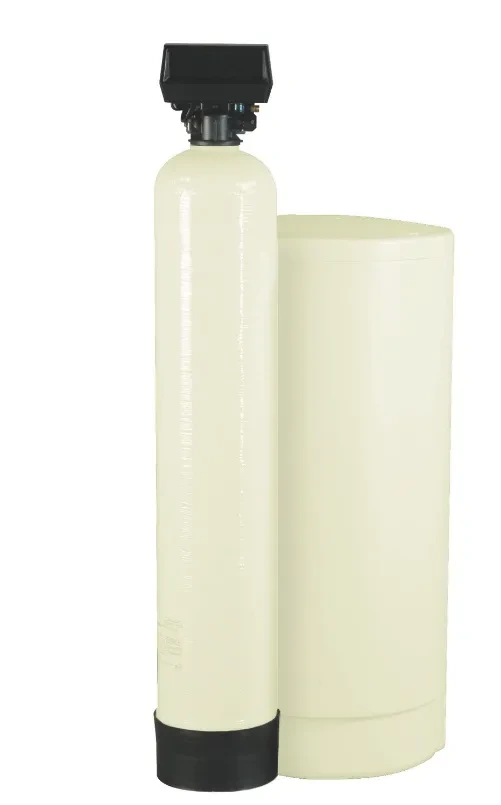
- residential ion-exchange water softeners
- PWSCAB45K conventional softening
- PWSR145 conventional softening
- OneFlow salt-free scale-prevention technology
- OneFlow+ OFPSYS filtration plus scale prevention
- whole-house filtration products
- point-of-use reverse-osmosis systems
- contaminant-specific drinking-water filtration
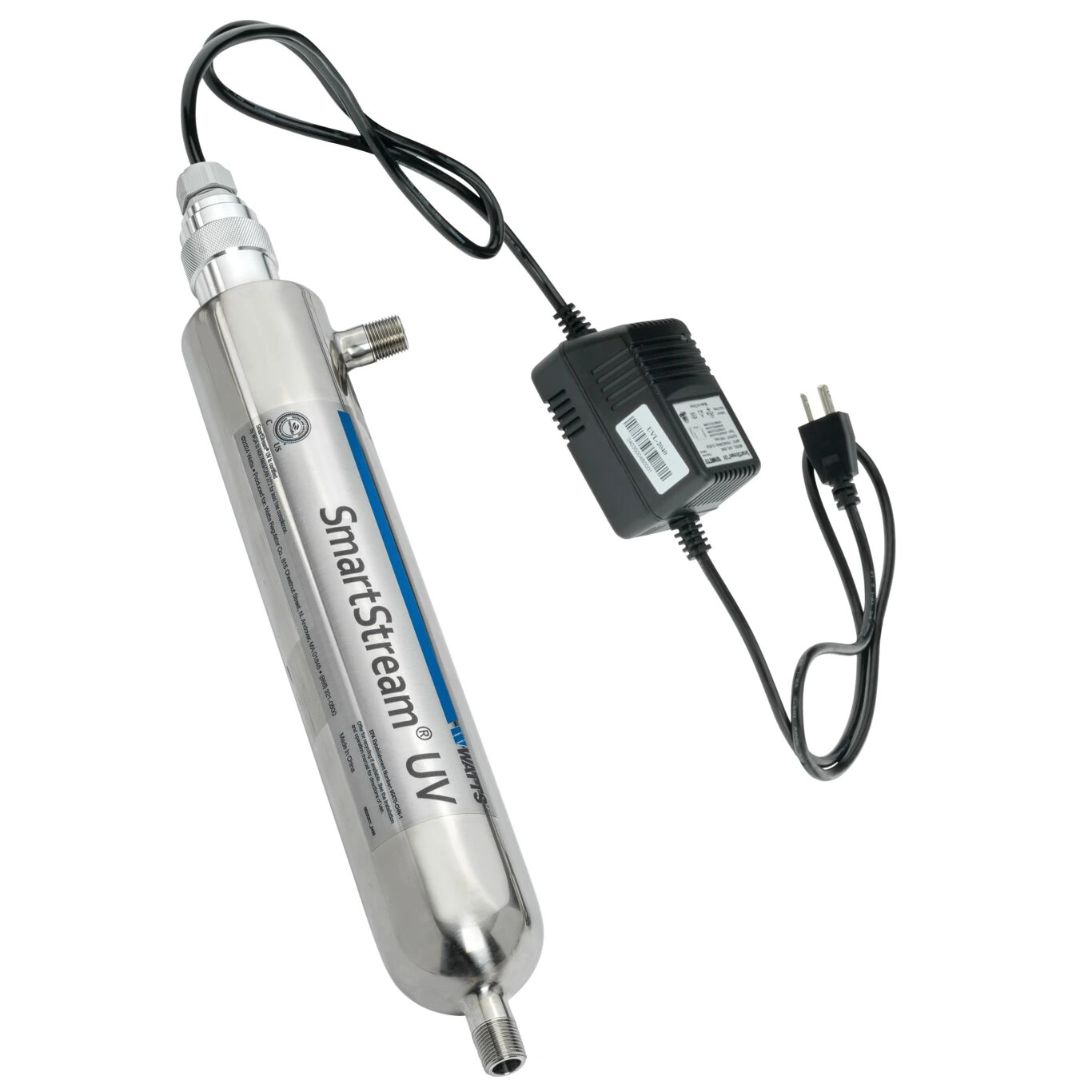
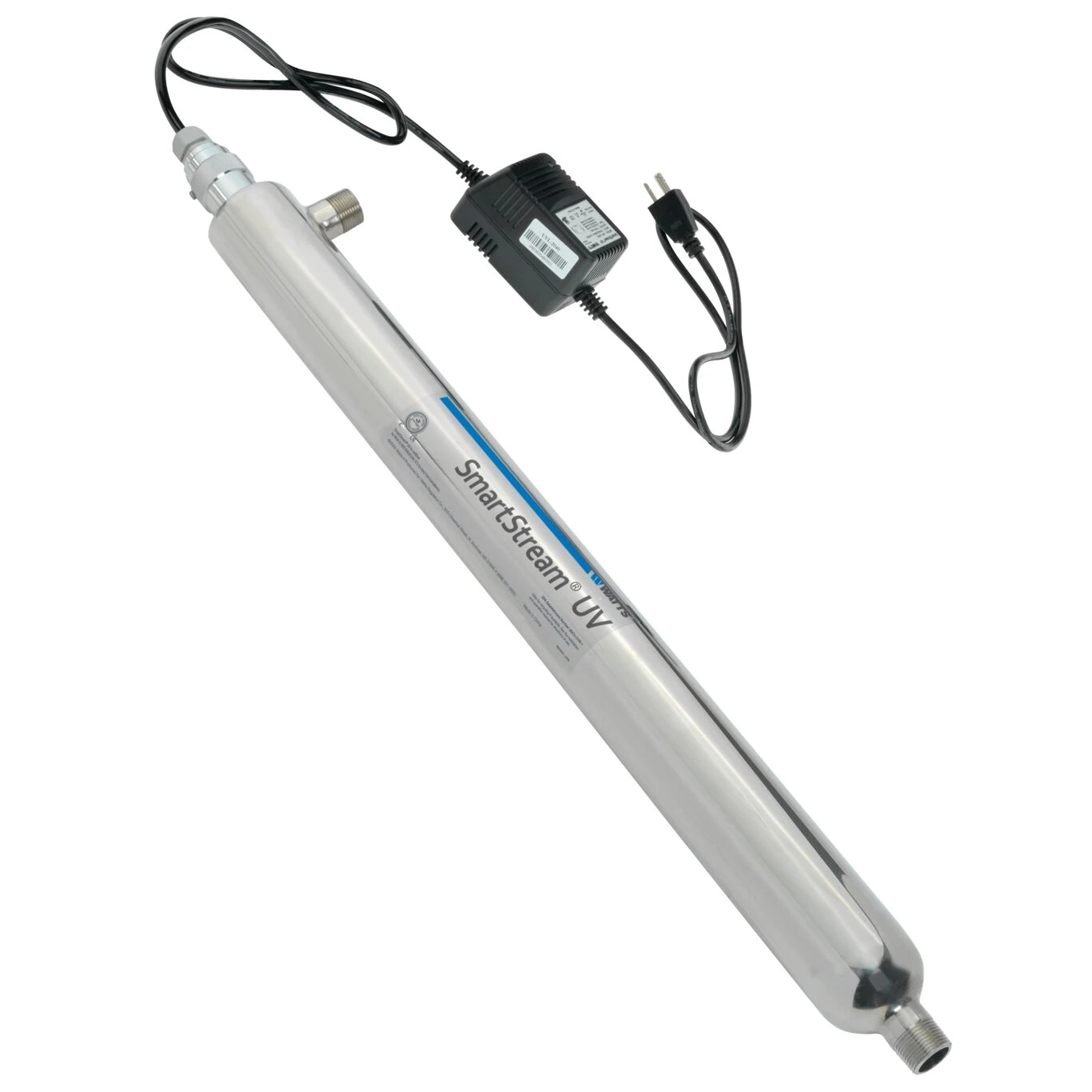
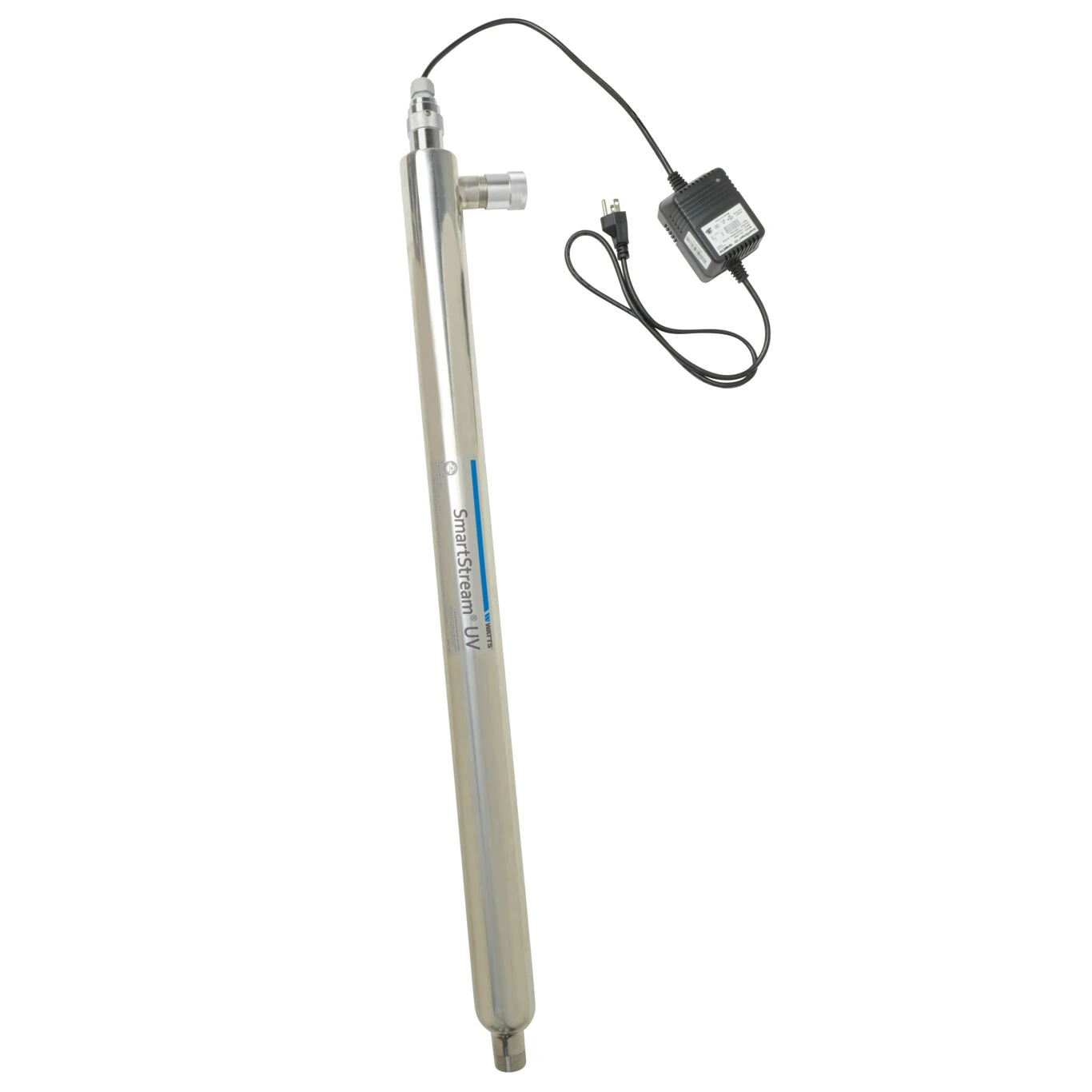
- residential UV systems
- manufacturer documentation for exact product families
- distributor / wholesaler sales pathway
What Remains Model-Specific
Do not generalise these across every Watts product:
- contaminant-reduction certification
- current retail price
- installed cost
- local stock
- exact warranty
- local labour coverage
- service availability
- replacement media life
- maximum treatment flow
- suitability for private-well conditions
Those must be verified for the exact system being proposed.
Bottom Line
Watts is a broad water-treatment manufacturer, not one treatment method.
For true hardness removal, compare Watts’ conventional ion-exchange softeners such as PWSR145 and PWSCAB45K.
For salt-free scale management, compare the OneFlow family, understanding that hardness minerals remain in the water.
For whole-house filtration, choose the exact Watts filtration system and cartridge based on the documented concern.
For drinking-water treatment, Watts offers reverse-osmosis and contaminant-specific point-of-use filtration products.
The right Watts system starts with the treatment job, not the badge.
Determine what needs to change in the water, choose the appropriate mechanism, then evaluate the exact model, certification, capacity, installation scope and ownership cost.
Frequently Asked Questions
Does Watts make water softeners?
Yes. Watts manufactures conventional ion-exchange residential softeners, including PWSR145 and the PWSCAB45K cabinet system.
Is Watts OneFlow a water softener?
No. OneFlow is a scale-prevention/conditioning technology. It does not remove calcium and magnesium hardness minerals in the same way as ion exchange.
Does OneFlow lower water hardness?
No. Hardness minerals remain in the water, so measured hardness should not be expected to fall as it would after conventional softening.
What is the difference between Watts OneFlow and a Watts softener?
A Watts softener removes hardness ions using ion exchange and periodically regenerates with brine. OneFlow manages scale behaviour without conventional salt regeneration while leaving hardness minerals in the water.
What is the Watts PWSCAB45K?
PWSCAB45K is a residential cabinet-style ion-exchange softener with up to 45,000 grains of documented maximum capacity and 1.5 cubic feet of resin.
Does Watts make reverse-osmosis systems?
Yes. Watts manufactures residential point-of-use RO systems including the Kwik-Change PWROKC4 and additional RO configurations.
Does Watts make whole-house filters?
Yes. Watts manufactures whole-house filtration equipment including Big Bubba configurations and other residential filtration products.
Are Watts systems NSF certified?
Some exact Watts products have relevant certification, but certification is model- and claim-specific. Verify the exact system, standard and named reduction before purchase.
How much does a Watts water treatment system cost?
There is no single verified national installed price across the Watts product range. Pricing depends on the exact equipment, distributor, installer and installation scope.
Can homeowners buy directly from Watts?
Watts’ standard product pages state that Watts does not sell directly to homeowners and instead direct buyers to wholesalers, distributors and sales representatives.
Does Water System Guide sell or install Watts systems?
No. Water System Guide is an independent research publisher and is not Watts, a Watts distributor or an installer.
Editorial disclosure
Water System Guide independently researches water-treatment products using manufacturer documentation, specification sheets, certifier records and other primary evidence where available.
Product specifications, certification, availability, pricing and warranty terms can change. Confirm material claims against current documentation for the exact product being proposed.